Executive summary
Longview Commercial’s bi-annual, institutional-grade market intelligence publication — designed to give accredited investors, whether new to private real estate funds or experienced in direct asset ownership, a clear, unvarnished view of the markets wetarget for deployment.
Each edition focuses on a single metropolitan market, assessed across the dimensions that matter most: demographic
momentum, employment health, supply/demand dynamics, capital flows, and submarket selectivity. Our goal is not simply to share data, but to translate that data into investment context relevant to a diversified multifamily portfolio.
Huntsville, Alabama serves as our eighteenth edition and the second Alabama market in this series in the Longview portfolio
strategy. As one of the nation’s most dynamic Sunbelt metros, Huntsville exemplifies both the opportunity and the nuance that sophisticated multifamily investing demands. The following pages present our mid-2026 assessment.
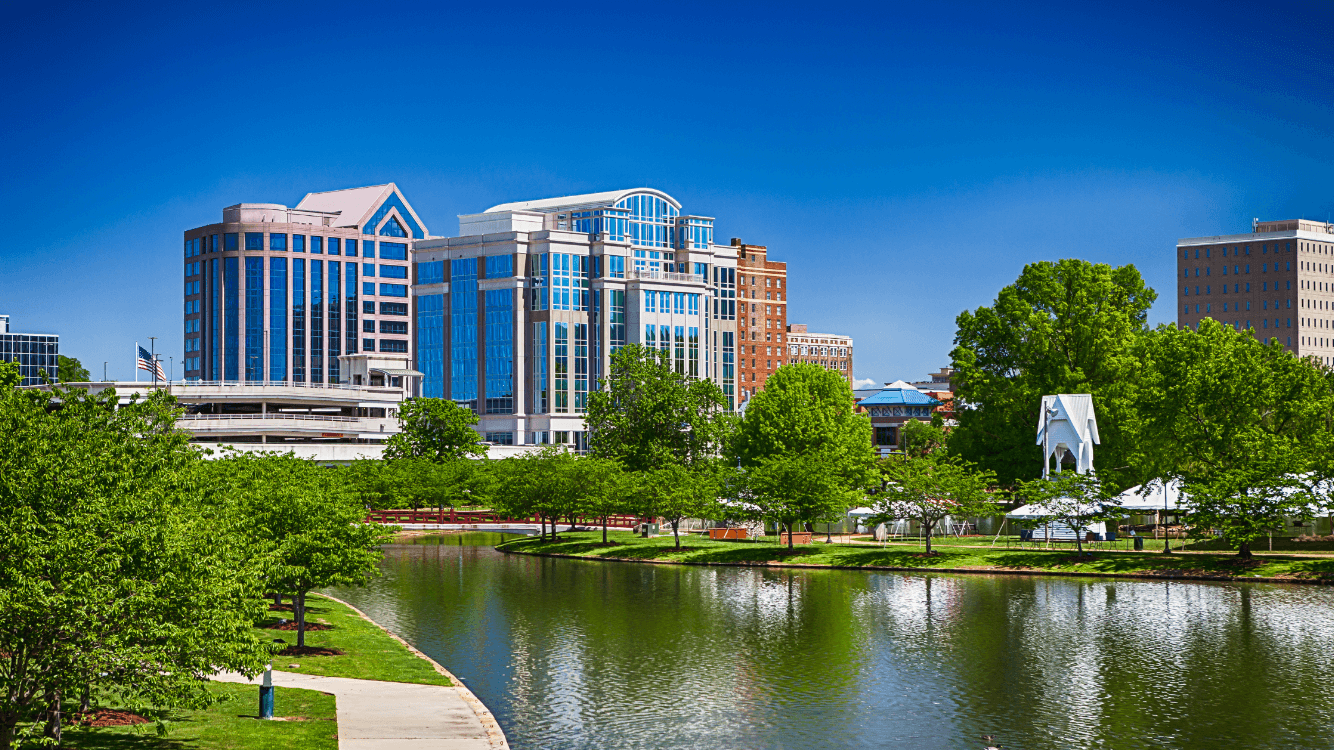
This Is What Huntsville Looks Like
Longview Commercial specializes in constructing diversified institutional-quality multifamily portfolios for accredited and sophisticated investors. This report delivers an independent, data-driven assessment of the Huntsville multifamily sector as of mid-2026, focusing on metrics that signal market health, investment viability, and long-term positioning.
$1,225-$1,278
Average Rent per Unit
−3.0% (trailing 12mo)
Rent Growth: Class A Hit Hardest at −4.8%
~17.9%–20%
Overall Vacancy
~$41.2M (trailing 12mo)
Multifamily Deal Activity
~1,470 units (−74% YoY)
Units Under Construction
Sources: Matthews Real Estate Investment Services. Data as of Q1–Q2 2026.
A Genuine Oversupply Crisis, Not a Demand Problem
Huntsville’s vacancy rate hit a record 20.0% in early 2024 and stood at 17.9% by the end of 2025 — among the highest readings of any market in this series — driven by net deliveries that reached 5,609–6,300 units in a single year, more than three times the metro’s 10-year annual average. Rents fell approximately 3.0% over the trailing 12 months, with Class A product hit hardest at −4.8% as new lease-ups compete directly with one another.
The critical context: this is unambiguously a supply-side story, not a demand-side one. Huntsville recorded net absorption exceeding 4,200–4,700 units in the past 12 months — more than 2.5 times its historical annual average of approximately 1,600 units — and has posted 17 consecutive quarters of positive absorption. Demand simply could not keep pace with an even larger supply wave that delivered more than 16,000 units over the past three years.
Current indicators point to the supply side finally, sharply, correcting:
- Units under construction fell to approximately 1,470 by mid-2025, down roughly 74% from the same time the prior year — one of the sharpest construction pullbacks in this series.
- Multifamily permits issued fell 32% year-over-year to roughly 938 units, with certificates of occupancy down 28% from 2024’s peak.
- Net absorption of 4,200+ units over the trailing year ran nearly three times the metro’s historical average, confirming underlying demand remains exceptionally strong.
- Investment sales, while still well below historical norms at approximately $41.2 million over the trailing year, have shown early signs of stabilization after a sharp 2024 decline.
Within the Longview portfolio, Huntsville reads as structurally similar to San Antonio and Birmingham: a market that overbuilt dramatically relative to its own history, is now correcting just as dramatically on the supply side, and is doing so against a demand base that never actually weakened.
General Metro Huntsville Metrics
Economy & Demographics
Population estimates vary by geographic definition. The City of Huntsville reached
approximately 249,000–250,000 residents as of mid-2025, Alabama’s most populous city. The narrower Huntsville MSA (Madison and Limestone counties) reached approximately 550,000– 556,000 per recent estimates, while a separate tracking series citing a different methodology put the metro at approximately 420,000 in 2025. Since 2020, the metro’s population has grown approximately 14%, outpacing national averages.
Employment & Labor Force
We did not identify a current, precise employment growth percentage with the same rigor available for larger markets in this series. Available sources describe employment surging approximately 60% since 2000 — well outpacing national averages — with unemployment well below the national rate, reinforcing continued labor-market strength even amid the current multifamily
oversupply.
Job Diversity & Industry
Anchored by Redstone Arsenal, home to NASA’s Marshall Space Flight Center, the U.S. Army Missile Command, the Missile Defense Agency, and an FBI regional headquarters. Cummings Research Park, adjacent to the Arsenal, is the second-largest research park in the country, hosting 300+ companies and 26,000 employees. Major private-sector operations include Boeing, Lockheed Martin, Northrop Grumman, Blue Origin, and Mazda Toyota Manufacturing USA (3,000+ engines daily). Downtown investment includes the
$350 million MidCity District, the 545-unit Front Row project (Q2 2026), and the $240 million North Village Town Center.
Fortune 500 Headquarters
We did not identify any Fortune 500 company headquartered in Huntsville. The metro’s economic weight comes from major federal installations (Redstone Arsenal) and large operational, rather than headquarters, presences from Boeing, Lockheed Martin, Northrop Grumman, and Blue Origin — a different corporate profile than the headquarters-concentrated metros elsewhere in this series.
Demographics & Renter Population
A highly educated, defense- and aerospace-oriented renter base: 48% of residents hold a bachelor’s degree or higher, among the highest rates in this series. The University of Alabama in Huntsville adds a student and research-affiliated renter pool. Median household income figures varied notably by source in our review; we recommend confirming current figures directly.
Crime & Livability Trends
We identified only limited, lower-confidence crime-trend data specific to Huntsville, including one source citing an approximate 3% year-over-year decline in 2024 crime rates. We could not independently verify this against primary law-enforcement data with the rigor applied elsewhere in this series and flag it as unconfirmed.
Overall, Huntsville combines one of the most concentrated defense and aerospace employment bases of any U.S. metro with genuinely exceptional, well-documented renter demand — set against the most severe, clearly supply-driven oversupply condition of any market in this series to date.
Multifamily Metrics vs. National Benchmarks
Rent, Occupancy & Transaction Detail
Rent, Occupancy & Transaction Detail
Q1 2024 Peak Under Construction
Mid-2025 Under Construction
Huntsville’s supply correction is among the sharpest of any market in this series in percentage terms: units under construction fell approximately 74% year-over-year, following net deliveries that ran more than three times the metro’s historical average. Critically, this occurred despite — not because of — weak demand: net absorption over the same period ran nearly three times its own historical average, confirming the oversupply is a construction-timing problem layered on top of genuinely strong underlying demand.
Current & Future Trends
Vacancy hit a record 20.0% in early 2024 and has since moderated to approximately 17.4– 17.9%, still among the highest readings of any market in this series, driven by deliveries running more than three times the historical annual average.
Madison/Airport and University/Research Park submarkets recorded the highest net absorption over the past 12 months, signaling durable long- term demand even amid the broader oversupply.
Investment sales volume remains well below historical norms, though early signs of stabilization have emerged after a sharper 2024 decline.
With construction activity down approximately 74% and permits down 32% year-over-year, the supply side has corrected sharply, setting up conditions for a 2027 rebound as current inventory leases up.
High-profile downtown investment, including the\ $350 million MidCity District and the 545-unit Front Row project, continues even amid the broader construction pullback.
As current inventory works through lease-up and vacancy continues moderating, transaction activity
should gradually recover alongside operating fundamentals.
Redstone Arsenal’s federal defense and aerospace
presence, combined with Cummings Research Park’s 26,000+ jobs, provides one of the most insulated, demand-durable employment bases of any market in this series.
Downtown Huntsville rents fell the most sharply of any submarket reviewed, reflecting the concentration of new competitive supply in the urban core specifically.
Huntsville’s exceptionally strong, well-documented
absorption trend — nearly three times its historical
average — provides a clearer demand-side underwriting case than markets where absorption
itself remains in question.
Market Projection — Five Years From Now (~2031)
Important Statistics Snapshot
Huntsville Multifamily Market
Vacancy —a record high for this market, among the highest in this series
~17.9%–20%
Decline in units under construction, year-over-year (mid-2025)
−74%
Trailing 12-month absorption — nearly 3x the
market’s historical average
4,200+ units
Consecutive quarters of positive net absorption
17 quarters
Rent growth, trailing 12 months (Class A: −4.8%)
−3.0%
Trailing 12-month transaction volume —well below historical average
~$41.2M
Huntsville Economy Statistics
Population —figures vary by geographic definition. +14% Metro population growth since 2020
~249,000 city /
~550,000 metro
Unemployment Rate (Seasonally Adjusted)
2.7%
Job Growth: Avg. +725 jobs / month (Strong at ~3.5% in recent reports)
Homicide rate decline (Down 50% since 2019)
Dropped by 18%
Key Notes/Drivers: Aerospace/defense (NASA Marshall Space Flight Center),
cyber/tech, government contracting, and manufacturing. Standout low-unemployment, high-growth tech/defense market.
Main Companies & Market Players
Local & Regional
We did not identify a single, dominant Huntsville-headquartered multifamily developer comparable to the local anchors profiled in other editions of this series in our sourcing for this edition.
National Platforms
Development activity remains concentrated in high-profile mixed-use projects, including the $350 million MidCity District and the 11-acre, 545-unit Front Row project downtown (completing Q2 2026), alongside the separately approved $240 million North Village Town Center retail development.
Investors
Investment sales totaled approximately $41.2 million over the trailing year, well below historical norms, though early signs of stabilization have emerged. Longview Commercial structures diversified portfolios to give investors access to institutional-quality multifamily without concentrating risk in any single metro’s supply cycle or economic base.
Submarket Intelligence
Madison/Airport
One of the two submarkets recording the highest net absorption over the past 12 months, signaling durable demand even amid the broader oversupply.
University/Research Park
Alongside Madison/Airport, among the strongest-absorbing submarkets in the metro, benefiting from proximity to the University of Alabama in Huntsville and Cummings Research Park.
Downtown Huntsville
The most directly affected by concentrated new supply, including the MidCity District and Front Row developments; one rent tracker showed downtown posting the sharpest recent rent declines of any submarket.
Data Note
Submarket views reflect qualitative positioning drawn from broker and proprietary market research as of mid-2026. Granular submarket-level rent and occupancy data were not available at point-estimate resolution for this edition and are flagged rather than estimated.
In a Nutshell
Huntsville in 2026 presents a genuinely unusual combination: record-high vacancy driven entirely by a supply wave that outpaced even exceptionally strong demand, not by weakness in the renter base. Absorption running nearly three times the market’s historical average confirms Redstone Arsenal’s defense and aerospace base continues driving genuine demand even as vacancy sits near record highs. With construction down ~74% year-over-year, the supply correction appears well underway. We flag a significant, unresolved data conflict in our sourcing and recommend independently verifying current rent and vacancy figures before underwriting.
Longview Commercial is positioned to help accredited investors access high-quality, professionally managed multifamily exposure in this evolving market. All projections involve uncertainty; investors should conduct independent due diligence and consult offering documents.