
Tampa delivered more new apartments in 2024 than in any year on record, then construction starts collapsed to a nine-year low almost overnight. That is precisely the kind of whiplash that creates opportunity for investors who can underwrite the trough rather than extrapolate the headline vacancy number.
August 2026
Mid-2026 Outlook
Longview Commercial’s bi-annual, institutional-grade market intelligence publication — designed to give accredited investors whether new to private real estate funds or experienced in direct asset ownership, a clear, unvarnished view of the markets we target for deployment.
Each edition focuses on single metropolitan market, assessed across the dimensions that matter most: demographic momentum, employment health, supply/demand dynamics, capital flows, and submarket selectivity. Our goal is not simply to share data, but to translate that data into investment context relevant to a diversified multifamily portfolio.
Tampa, Florida serves as our eighth edition and the second Florida market in this series in the Longview portfolio strategy. As one of the nation’s most dynamic Sunbelt metros, Tampa exemplifies both the opportunity and the nuance that sophisticated multifamily investing demands. The following pages present our mid-2026 assessment.
Longview Commercial specializes in constructing diversified institutional-quality multifamily portfolios for accredited and sophisticated investors. This report delivers an independent, data-driven assessment of the Tampa multifamily sector as of mid2026, focusing on metrics that signal market health, investment viability, and long- term positioning.
Sources: Yardi Matrix, CoStar Group, Cushman & Wakefield, Marcus & Millichap. Data as of Q1–Q2 2026
Tampa delivered approximately 12,500 apartment units in 2024 — a market record, more than 4,000 units above the prior peak. That supply wave pushed vacancy to what CoStar has called the highest level it has tracked in this metro since 2000, at approximately 10.7%, and rents have declined on a trailing year-over-year basis in most recent readings.
The countervailing signal is abrupt: new construction starts fell to fewer than 350 units in a single quarter in late 2024 — the
lowest quarterly total in nine years. 2026 completions are forecast at approximately 7,559 units, down sharply from the 2024
peak, and full-year 2026 absorption is projected at roughly 6,126 units — still short of deliveries, but a meaningfully narrower gap than in 2024.
Within the Longview portfolio, Tampa reads as structurally similar to San Antonio: a market that overbuilt sharply, is now seeing an equally sharp construction correction, and offers a contrarian entry setup for investors willing to underwrite the trough rather than the headline vacancy rate.
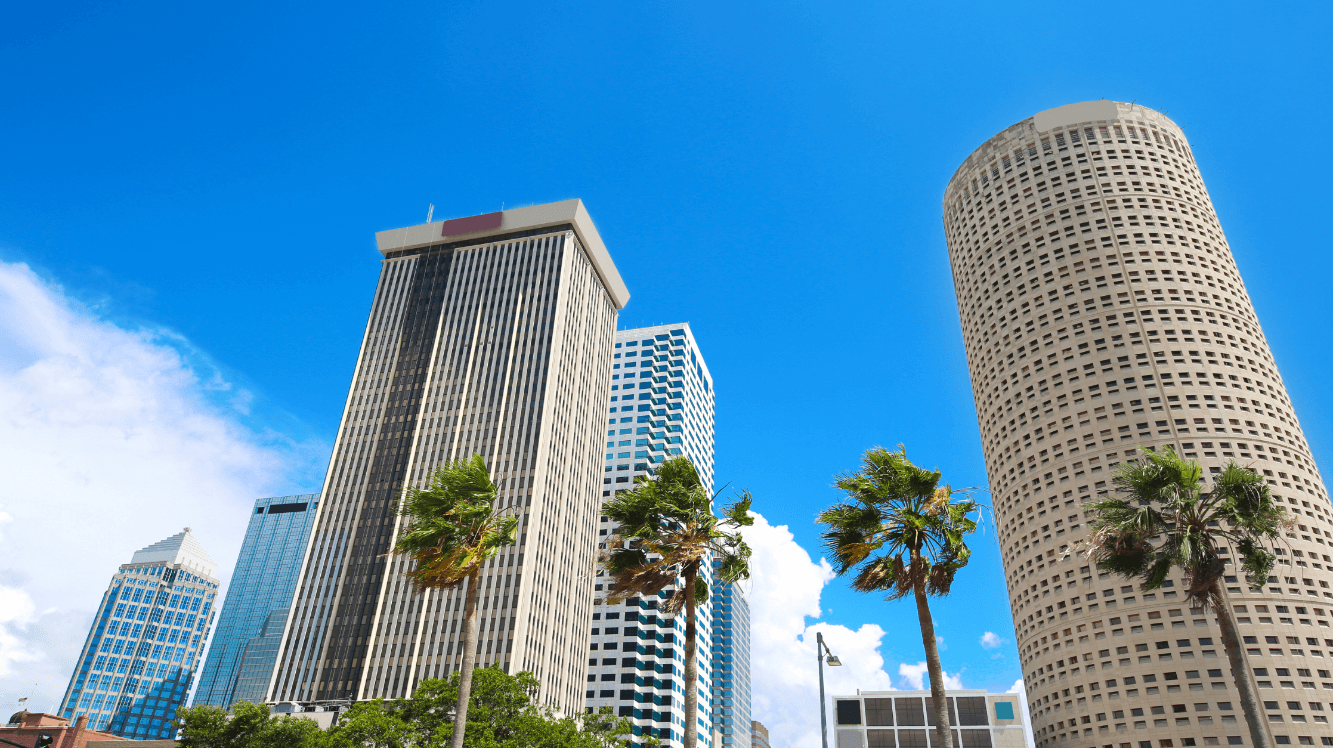
The Tampa Bay metro area has surpassed 3.4 million residents, adding approximately 270,000 people over the past five years and 497,000 since 2020. Hillsborough County alone is projected to gain another 121,000 residents by 2030. That said, the region is projected to post its slowest annual population growth rate since 2011, reflecting the broader moderation in Sunbelt in-migration from 2022 pandemic-era peaks.
Tampa added approximately 17,700 net jobs in the 12 months ending July 2025 (Yardi Matrix), led by education and health services. Unemployment estimates varied by source and period, ranging from approximately 4.4% (August 2025) to 4.6% (December 2025, up from 3.3% a year earlier) — a genuine labor-market deceleration worth monitoring alongside the supply correction.
A diversified base spanning tourism, healthcare, finance, insurance, technology, construction, and maritime trade — Port Tampa Bay is the largest port in Florida, responsible for more than $15 billion in annual economic impact. Tampa is also home to MacDill Air Force Base, headquarters of U.S. Central Command, described by some as the most significant military command headquarters after the Pentagon itself.
Tampa hosts two Fortune 500 headquarters — Crown Holdings and The Mosaic Company — alongside a deeper bench of Fortune 1000 and large private employers including Raymond James Financial, Bloomin’ Brands, WellCare, Jabil, and TECO Energy. This is a smaller Fortune 500 concentration than Houston, Dallas-Fort Worth, Atlanta, or Miami, offset by Tampa’s diversified mid-cap corporate base and defense-sector anchor at MacDill.
Tampa’s median household income (approximately $75,500 for the city proper) and median age (35.9) sit between Houston’s more moderate-income profile and Austin’s higher-income base. The metro’s affordability relative to Miami, combined with continued (if decelerating) in-migration, supports a broad renter demand base across income tiers.
A genuinely improving regional trend, though the picture varies by measure. The Tampa Bay Partnership’s 2025 Regional Competitiveness Report found the region’s Total Crime Index improved from 92 to 83 (17% safer than the national average, versus 8% safer the year before) and its Violent Crime Index improved from 94 to 83, ranking 5th among peer regions nationally. Citylevel consumer crime-rating services show a more mixed current snapshot, underscoring that regional trend data and single-year city-level snapshots can tell different parts of the same story.
Overall, Tampa combines genuine structural demand (population and job growth, port and defense-sector anchors, improving regional safety trends) with the most abrupt supply-cycle whiplash of any market in this series outside San Antonio.
2024 Deliveries (Record Year)
~12,500 units
2026 Deliveries (Forecast)
~7,559 units
Tampa’s supply cycle has been unusually compressed in time: a record delivery year in 2024 followed almost immediately by a construction-starts collapse to a nine-year low. That whiplash pattern is closer to San Antonio’s dynamic than to the more gradual corrections underway in Austin or Dallas-Fort Worth — and it means the 2024-vintage supply overhang, not an ongoing wave, is the primary variable to underwrite.
CURRENT (2026)
Record 2024 deliveries pushed all-property vacancy to its highest CoStar-tracked level since 2000, even as stabilized- property occupancy held up better on a Yardi Matrix basis.
Performance already diverges by submarket: Seminole Heights, Hyde Park, and Palma Ceia show vacancy below 5%, while Pasco County, Southeast Tampa, and Downtown Tampa carry the heaviest supply and most widespread concessions.
Investment volume held up relatively well through the correction, with Tampa posting the second-highest in Florida in Q1 2026.
5-YEAR OUTLOOK ( 2031)
With construction starts at a nine-year low and 2026 deliveries forecast well below the 2024 peak, vacancy should begin compressing as the 2024-
2025 delivery wave is absorbed.
As deliveries slow further in submarkets like West Pasco County-Hernando and South St. Petersburg, those areas should see the fastest vacancy relief.
Continued investor interest, even amid elevated vacancy, suggests the market is being priced as a cyclical correction rather than a structural impairment.
10-YEAR OUTLOOK
Tampa’s port, defense, tourism, and healthcare anchored economy provides a durable long-term demand base once the current supply overhang clears.
Central Tampa and New Tampa-East Pasco County are expected to see continued elevated completions through 2026, meaning submarket level supply risk will persist even as the metro wide pipeline thins.
A full recovery would likely track a similar multiyear trajectory to San Antonio’s post-correction
path within this series.
Q4 2024 construction starts — a nine-year low for the metro
<350 units
2024 deliveries—a market record, shattering the prior peak
~12,500 units
Vacancy — stabilized vs. all-property basis (see Data Note
~5.4% / ~10.7%
Average asking rent (source range)
~$1,768–1,800
2026 deliveries forecast, down sharply from
the 2024 peak
~7,559 units
Q1 2026 multifamily sales volume — 2ndhighest in Florida
~$2.0B
Tampa Bay metro population, +497,000 since 2020
~3.4M+
Unemployment Rate
~4.5%
Job Growth
Modest positive
in recent data
TampaBayTotal Crime Index
improvement(lower is safer), per regional competitiveness report
92 → 83
Key Notes/Drivers: Finance, healthcare, tourism, logistics, and professional services. Steady recovery and population inflows.
American Landmark Apartments, headquartered in Tampa, is one of the fastest-growing multifamily owner-operators in the country, with approximately 32,000 units across seven states.
The Bainbridge Companies (Wellington, FLbased, with a dedicated Tampa office) has developed, redeveloped, or repositioned more than 35,000 multifamily units across the Eastern U.S., alongside active national platforms including MAA (Mid-America Apartment Communities), Flournoy
Companies, and Zom, Inc. active in recent Tampa deliveries.
Tampa’s multifamily investment market has remained comparatively resilient through the supply correction, with 2024 seeing a resurgence in large-scale transactions (over 20 deals above $50 million, up from 13 the prior year). Longview Commercial structures diversified portfolios to give investors access to institutional-quality multifamily without concentrating risk in any single metro’s supply-cycle stage.
Submarket
Profile & Theme
Longview View
Seminole Heights, Hyde Park & Palma Ceia
Established, centrally located neighborhoods with vacancy below 5% and consistent demand, largely insulated from the metro’s broader supply pressure.
Favorable
Pasco County (West Pasco- Hernando)
A genuine bifurcation: Pasco continues to attract an outsized share of new residents even as it has also absorbed some of the metro’s heaviest recent construction — both a demand and supply story at once.
Selective
Central Tampa & New
Tampa-East Pasco County
Expected to see continued elevated completions through 2026, likely pushing local vacancy rates higher even as the broader metro pipeline thins.
Cautious
Downtown Tampa &
Southeast Tampa
Among the hardest-hit submarkets in the current cycle, with widespread concessions as Class A projects work through lease-up.
Cautious
Submarket views reflect qualitative positioning drawn from broker and proprietary market research as of mid-2026. Granular submarket-level rent and occupancy data were not available at point-estimate resolution for this edition and are flagged rather than estimated.
Tampa in 2026 is a market defined by whiplash: a record 2024 delivery year pushed vacancy to multi-decade highs on an allproperty basis, followed almost immediately by a construction-starts collapse to a nine-year low. Rents remain under modest pressure and the labor market has softened, but investment activity has stayed comparatively resilient, and the metro’s port, defense, and healthcare- anchored economy provides real structural demand once the current supply overhang clears. Within a diversified Sunbelt allocation, Tampa pairs most closely with San Antonio’s contrarian, correction-stage positioning — with the added consideration of Florida’s insurance and hurricane exposure that Texas markets do not carry.
Longview Commercial is positioned to help accredited investors access high-quality, professionally managed multifamily exposure in this evolving market. All projections involve uncertainty; investors should conduct independent due diligence and consult offering documents.
Website: www.longviewcommercial.com